
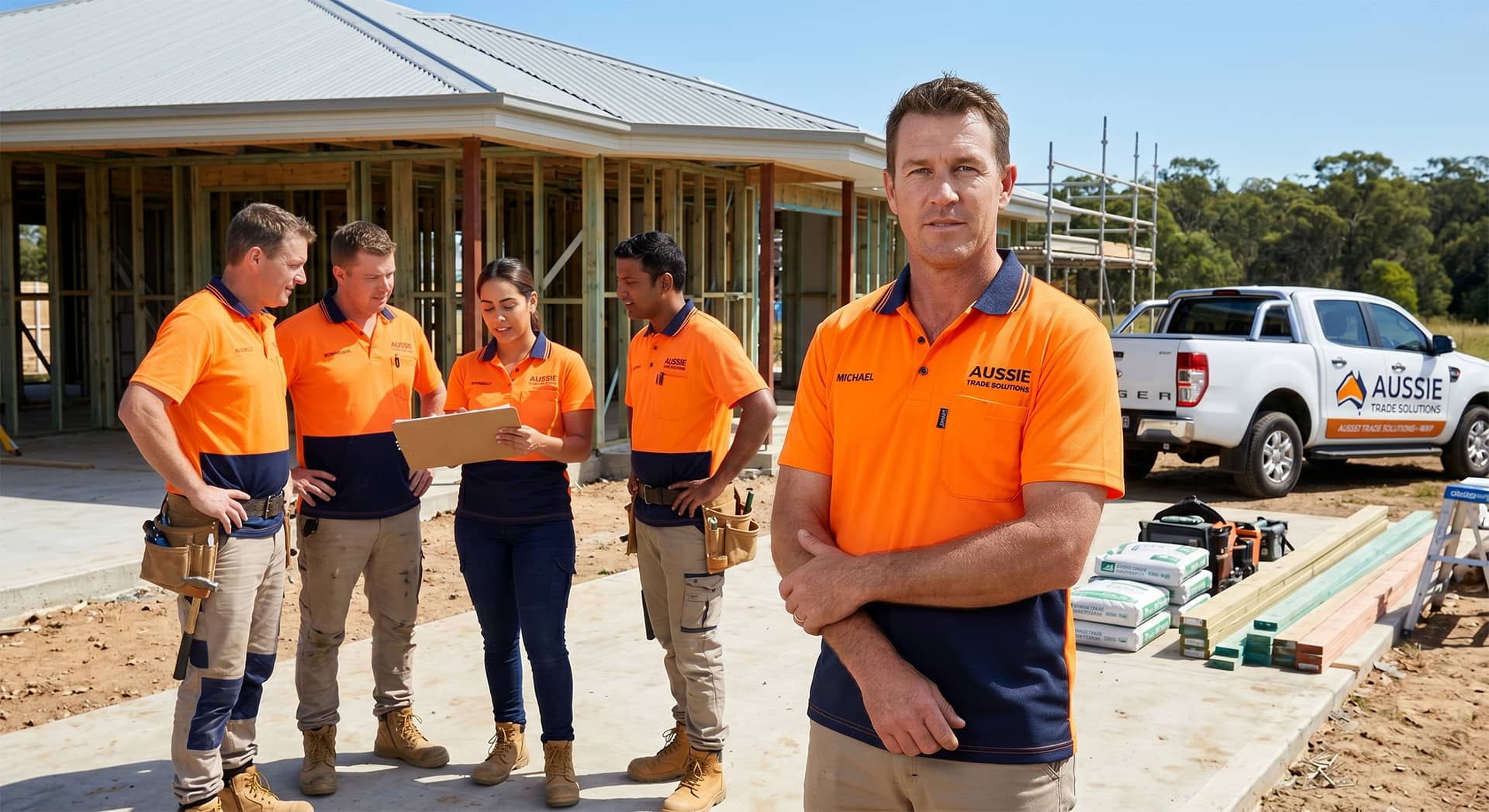
Be honest. How many of your weekends in the last six months have been spent thinking about staff?
Not running jobs. Not quoting. Not chasing money. Just thinking about the team. Who’s pulling their weight, who’s not, who you wish you hadn’t hired, who you can’t afford to lose, and whether you’d just be better off doing the lot yourself.
If that sounds familiar, you’re in the right place.
The single biggest reason most trade business owners are still on the tools at 6pm on a Wednesday is not marketing, and it’s not pricing. It’s the team. Either they don’t have one, or they have one and it’s costing them more than it’s earning them, or they have a good one and they’re terrified of losing them.
This is a long read. Bookmark it. We’re going to walk through what an actual rockstar tradie team is built on. The four levers we pulled at Dr.DRiP, the order we pulled them in, and what changes when you get them right.
We’re not handing you the templates and scripts here. Those live inside Lifestyle Tradie, and members work through them with us week by week. What we are giving you is the map. By the end of this, you’ll know exactly what’s broken in your business and exactly what to fix first.
This is Pillar 1 of the 3 P’s to Freedom Formula: People, Platform and Profit. If you’d rather start with the other two, head to the Platform hub or the Profit hub. The Marketing hub rounds out the four.
Table of Contents
The hidden cost of the team you have right now
Before we talk about building a better team, let’s name the cost of the one you’re walking around with.
Most tradie owners we talk to underestimate this number by a factor of two. They count the wage. They count the super. They might count the ute, the phone, the petty cash. What they don’t count is the rest:
- The rework cost when a job has to go back twice
- The customer-trust cost when an average tradie does an average job and the review isn’t five stars
- The team-morale cost when an A-grader watches a B-grader cruise on the same wage
- The owner-time cost. The hours you spend re-doing, re-explaining, re-scheduling
- The opportunity cost of every A-player you didn’t have time to hire because you were managing a B-player
Add it up properly and a single C-grade or D-grade employee can quietly cost a small trade business $40,000 to $80,000 a year. Often more. If that number sounds high, listen to How Much Are Your Tradies REALLY Costing You? on The Tradie Show. Andy and Angela walk through the wages-plus-vehicle-plus-smoko-plus-downtime maths that takes most owners by surprise.
The punchline is this. The team you tolerate is the team you’ve decided to pay for. And most tradies are paying for far more than they realise.
A useful way to audit the cost of your current team is our free guide KPI’s for Your Team. It walks you through the numbers to track per tradesman so you can see, in black and white, who’s earning their keep and who isn’t.
The good news. This is reversible. The four levers below are the reversal.
The four levers of a rockstar tradie team
At a concept level, every great tradie team is built on four things, in this order:
- The right people walking in the door. And the wrong ones not.
- The right culture once they’re in. So they want to stay.
- The right rhythms. So the team operates as a team, not a collection of individuals.
- The right leadership from you. Because the team takes its temperature from the boss.
None of this is complicated. All of it is uncomfortable. That’s why most tradie owners never do it. It’s also why the ones who do build businesses that scale, sell, or let them step right back.
If you’d rather hear us talk this through, have a listen to The Secret to Hiring Rockstars: Proven Tips to Attract A-Grade Tradies on The Tradie Show, and How to Switch From a Manager to a Leader in Your Trade Business.
Let’s walk through each lever.
Lever 1: The right people walking in the door
Most tradie hiring is reactive. A bloke quits, a job is double-booked, you panic-post an ad on Seek that night, you take the first warm body that turns up to the interview, you hand them a uniform on Monday, and three months later you’re surprised it didn’t work out.
Recruitment built on panic gets you panic-grade people.
A-graders don’t apply for ads written for B-graders. They apply for ads that make them think “this is the kind of business I want to work for”. They sit through interviews that feel like both sides are choosing. They join businesses with a clear induction, not a “follow Dave around for a week and see what happens”.
There are four traits to look for in an A-grade tradie. Attitude, accountability, attention to detail, and the ability to coach themselves. Skill is the easiest of the five things you’re hiring for. Most owners get this backwards.
Three things to fix in your hiring this quarter:
- Stop hiring under pressure. Build a pipeline of candidates before you need them. The best hires almost never come from the ad you posted yesterday. They come from the network you’ve been building for six months.
- Recruit, then select. Recruitment is attraction. Selection is the saying-no part. Most tradies do recruitment well (they get applicants) and selection terribly (they say yes to almost everyone). Reverse it.
- Onboard like you mean it. First impressions cut both ways. The first two weeks decide whether your new hire becomes an A-grader, a B-grader, or a six-month problem. If you don’t have an onboarding plan, you don’t have onboarding. You have hope.
A word on the legal side. Every Australian trade business employing staff sits under the modern award system. Your obligations on minimum rates, overtime, leave, and fair dismissal are all spelled out at the Fair Work Ombudsman. Get those right before you get fancy. A well-run hire with a weak contract is still a weak hire.
For the deeper hiring conversation, two episodes of The Tradie Show that pair well: Haunted by Bad Hires? End the Hiring Horror Before It Starts and The Secret to Hiring Rockstars: Proven Tips to Attract A-Grade Tradies.
Three free resources that will lift your hiring game quickly:
- How to Find Staff Now. Our hiring-and-retention guide for finding A-grade staff.
- How to Grow Your Trade Business Team. For when you know you need to hire but aren’t sure of the order.
- Employee Onboarding Cheat Sheets. A flowchart for the first two weeks, so nobody gets thrown in the deep end.
Hire like this for twelve months and the calibre of your team will lift in a way you can almost measure month-on-month.
Lever 2: The right culture once they’re in
A-grade tradies don’t quit because of money. They quit because of three things, in this order: lack of growth, lack of recognition, and lack of clear leadership.
You can pay an A-grader the top end of the market and still lose them inside a year if you’re not also offering progression, respect and a sense that the business is going somewhere.
Culture in a trade business isn’t a poster on the wall. It’s not a values statement nobody reads. It’s the answer to a very simple question, asked of any one of your team on a random Tuesday afternoon: “Why do you work here?”
If the honest answer is “because the wage is alright and I haven’t found anything better yet”, you don’t have a culture. You have a payroll.
If the honest answer is “because I’m getting better, the boss has my back, and I can see where this is going”, you’ve got the early signs of a real one.
Three things culture is actually made of in a trade business:
- A clear vision the team can repeat back to you. If you can’t say in one sentence where the business is going, neither can they.
- A clear set of behaviours you reward and punish. Not just espoused. Actually enforced. The fastest way to kill culture is to tolerate one person breaking the rules everyone else is following.
- A clear sense of growth. Apprentices want to become tradesmen. Tradesmen want to become leading hands. Leading hands want to become foremen or branch managers. If your business has no ladder, your A-graders will go climb someone else’s.
Culture also lives on the safety side of the business. Any trade business with a team has obligations under the model Work Health and Safety laws, coordinated through Safe Work Australia. Getting WHS right is not paperwork. It’s a culture signal. The team you’d want knows the difference between a boss who takes safety seriously and one who waves it off.
Two episodes of The Tradie Show worth queuing up here: The C Word … CULTURE! How to Get It Right! and Creating an Unleavable Team with Shelley Johnson.
Build all three culture ingredients, get the WHS piece tight, and your retention problem largely solves itself.
Lever 3: The right rhythms
Most tradie teams don’t fail because the people are bad. They fail because the team operates as a collection of individuals rather than a team.
The fix is structured rhythm. Predictable, short, focused team contact that keeps everyone pulling in the same direction. The most powerful rhythm in a trade business is the weekly toolbox meeting. Done well, it’s the single highest-leverage 15-minute investment a trade business owner can make.
Done badly (late, unstructured, no agenda, no follow-through), it’s a vent session that makes things worse.
A real toolbox meeting has three things. A fixed cadence (same time every week). A fixed agenda (the same handful of items every time). A fixed outcome (a clear next action for every person in the room). Miss any of the three and the meeting becomes theatre. The audio companion to this section is Power & Pitfalls of Toolbox Meetings on The Tradie Show, where Andy and Angela share the Dr.DRiP weekly rhythm and the data on what actually changes when you run them properly.
Three other rhythms worth building once the toolbox meeting is humming:
- Weekly KPIs that the team actually sees. Tradies are competitive. Show them where they sit, in numbers, every week, and behaviour shifts without you having to nag. Start with our free KPI’s for Your Team guide.
- Monthly one-on-ones. Twenty minutes per team member, away from the truck. Half check-in, half career conversation.
- Quarterly performance reviews. Not the corporate kind. The “are we still pointed at the same goals” kind.
Build these four rhythms and the team stops needing you to be the connective tissue. That’s when the lights start to come on.
A companion resource worth downloading here is The Preloaded Year. It’s Angela’s planning tool for Aussie tradies, built to lock your rhythms into the calendar a year ahead so the year runs you through them, not the other way around.
Lever 4: The right leadership (from you)
Here’s the uncomfortable bit.
You can hire well, build a culture and run perfect rhythms, and if the leadership at the top isn’t there, none of it sticks. The team takes its temperature from the boss. If you’re chaotic, the business is chaotic. If you’re reactive, the team is reactive. If you say one thing on Monday and another on Wednesday, the team learns to ignore both.
Most tradies were never taught to lead. They were taught to install, build, wire or weld. Leadership is a different job entirely. It’s also the one that owners often hate the most, because it doesn’t feel like “real work”.
It is the real work. It’s also the work nobody else can do for you.
There are four shifts every tradie owner has to make to lead well:
- From doer to delegator. Stop being the best technician on the team. Start being the person who builds technicians.
- From reactor to planner. Stop running the business off the inbox. Start running it off a plan.
- From peer to coach. Stop being everyone’s mate. Start being everyone’s coach. (You can still be a mate at the BBQ on Saturday.)
- From boss to architect. Stop running the jobs. Start designing the business that runs the jobs.
This shift takes years. It also takes a community of other tradie owners doing the same shift around you, which is one of the reasons Lifestyle Tradie exists. The podcast companion here is How to Switch From a Manager to a Leader in Your Trade Business, which unpacks all four shifts with real-world examples.
Three free tools to get you moving on the leadership work:
- How to Be a Good Leader in Your Business. The guide we walk every new member through early.
- Time Maximiser. If the reason you’re not leading is that you’re drowning in jobs, this is where to start.
- The Art of Reflecting. A short exercise to stop long enough to see what’s actually holding you back.
Whichever of the four shifts feels most unreachable right now, that’s where the work begins. Start with a single decision this week in that area. And if you work with your partner in the business, and that piece is its own challenge, grab our free guide Working With Your Life Partner and have a listen to Working With Partners & Family Members a Challenge? and Working With Your Life Partner Towards Kicking Business and Life Goals Together together this weekend.

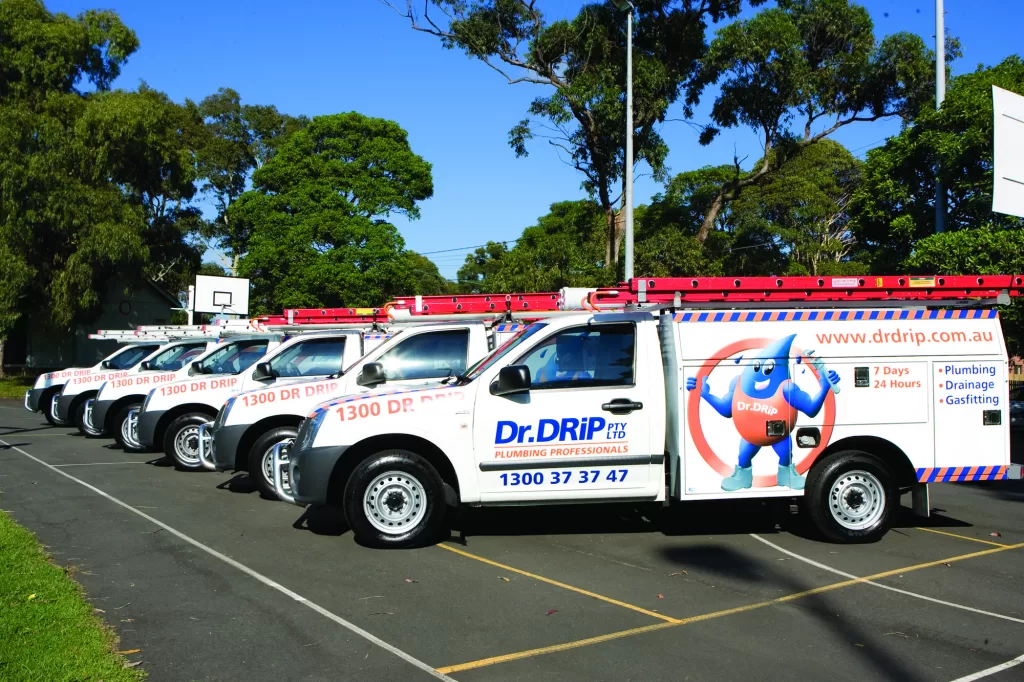
What this looked like at Dr.DRiP
We won’t pretend we got this right from day one. We got most of it wrong for years.
Early at Dr.DRiP we hired the way most tradies hire. Out of panic, off Seek, almost anyone who turned up. We had a team that was busy but not productive. We had wages going out and not enough coming back in. We had a culture that lived inside our own heads rather than on the floor.
The turnaround came from getting honest about all four levers in the same year. We rewrote the way we hired. We wrote down what we actually stood for. We built a Monday morning rhythm that we never missed. And Andy stopped trying to be the best plumber on the team and started being the leader the team actually needed.
Within two years, our team had stabilised, our customer reviews had jumped, our revenue per tradesman had lifted significantly, and for the first time we could take a holiday and the business kept running.
A few years after that, we sold Dr.DRiP. The team was the single biggest asset on the deal sheet.
That’s what a rockstar team looks like in practice. Not perfect. Not always quiet. But built deliberately, on the same four levers we’ve just walked through.
Where to start
Reading this, you’ll already have a sense of which lever is your weakest. Most owners do.
A useful test: think about the next twelve months. If you could only fix one of the four (hiring, culture, rhythms, or leadership), which one would unlock the most for the business?
That’s where to start.
If it’s hiring, start by killing the panic ad. Build a pipeline of candidates over the next ninety days, even if you don’t need anyone right now. Download How to Find Staff Now and How to Grow Your Trade Business Team.
If it’s culture, write down (in one paragraph, on the back of a docket) what the business actually stands for, who you reward, and who you don’t. Read that paragraph to your team at the next toolbox meeting and watch what happens.
If it’s rhythms, lock in a 15-minute weekly toolbox meeting starting next Monday. Same time, same agenda, every week. No exceptions. Grab KPI’s for Your Team and The Preloaded Year to set the framework.
If it’s leadership, and for most owners it is, start with How to Be a Good Leader in Your Business. The work begins with you.
Still feeling scattered? Download The $1M+ Trade Business Playbook. 39 business secrets every Aussie tradie needs to know but wasn’t taught. It’ll give you a sense of the full picture across People, Platform, Profit and Marketing.
The People library
Eight deeper guides on the People pillar are dropping over the coming months, each one building on a section of this hub:
- Why You’re Stuck on the Tools (And the Mindset Shift That Gets You Off Them)
- What an A-Grade Tradie Actually Looks Like (and How to Spot One)
- 5 Hidden Costs of Keeping a “D-Grade” Employee
- The Real Reason Good Tradies Quit (It’s Not the Money)
- Toolbox Meetings: The 15-Minute Habit That Transforms Team Performance
- Working With Your Spouse in the Business: Make-or-Break Lessons
- Why Most Tradie Bosses Are Terrible Leaders (And How to Become a Great One)
- Delegation for Tradies: Why You Can’t (Yet) and How to Start
A new guide drops roughly every two weeks. The quickest way to catch them as they land is to jump on our weekly tradie business tips newsletter, or book a Strategy Call if you want to skip the queue and work with us directly.
Want it on the tools rather than the screen? The Tradie Show podcast is the audio companion to a lot of this material. People-pillar starting points: How Much Are Your Tradies REALLY Costing You?, Haunted by Bad Hires?, The Secret to Hiring Rockstars, Power & Pitfalls of Toolbox Meetings and How to Switch From a Manager to a Leader.
Ready to build the team that lets you step back?
Inside Lifestyle Tradie, members work through the actual hiring system Andy and Angela built at Dr.DRiP. The interview scorecards, the onboarding checklists, the toolbox meeting templates, the performance review structure, the Tradie Team Dashboard for weekly KPIs, the lot.
It’s the same system that built the team that let us sell the business and walk away. And it’s the system hundreds of trade business owners around Australia are using right now to do the same thing through our trade business coaching and mentoring.
If your team is the bottleneck, and for most tradie owners reading this it is, book a free 30-minute Strategy Call with the Lifestyle Tradie team. We’ll look at where your team sits across the four levers and tell you, plainly, where to start.
Book your free Strategy Call →
Want to learn more about how Lifestyle Tradie helps trade business owners build more profitable, systemised businesses?
Learn more about Trade Business Coaching →
Or, if you’re ready to dive into the tools, templates and training, see what’s inside Lifestyle Tradie membership →